
Marrickville NSW 2204

Where production cleaning ends and contract cleaning begins in Marrickville

In a small food production business the same room holds process equipment, packaging, storage and a floor that everyone walks on. Deciding which of those a contract cleaner touches is not obvious, and getting it wrong in either direction creates a real problem.

In short

Process cleaning, which forms part of how food is made safely, generally stays with the production team because the method is tied to the product and often carries a verification step. Contract cleaning usually covers floors, walls, drains, amenities, external areas and periodic deep tasks outside production hours.

Clean Best writes that split surface by surface after walking the space with the production manager. Where a business wants the contractor inside the process boundary, the equipment, method, products and training all have to reflect the business's own food safety system, and the responsibility for that system stays with the operator.

Why the boundary is not obvious in a small facility

In a large plant the line is drawn by physical separation: process areas are distinct rooms with their own regimes. In a converted warehouse where mixing, packing, cold storage and dispatch share one open space, the boundary has to be drawn by surface and by time rather than by wall. That takes a conversation rather than a template, and it usually surprises both parties how much needed deciding.

The consequences of guessing run both ways. A contractor cleaning a process surface without understanding the verification requirement can invalidate a check the business relies on. A contractor avoiding everything near production leaves floors and drains that nobody else cleans, which is where most hygiene findings originate. Neither outcome is discovered quickly, which is why the split deserves the time.
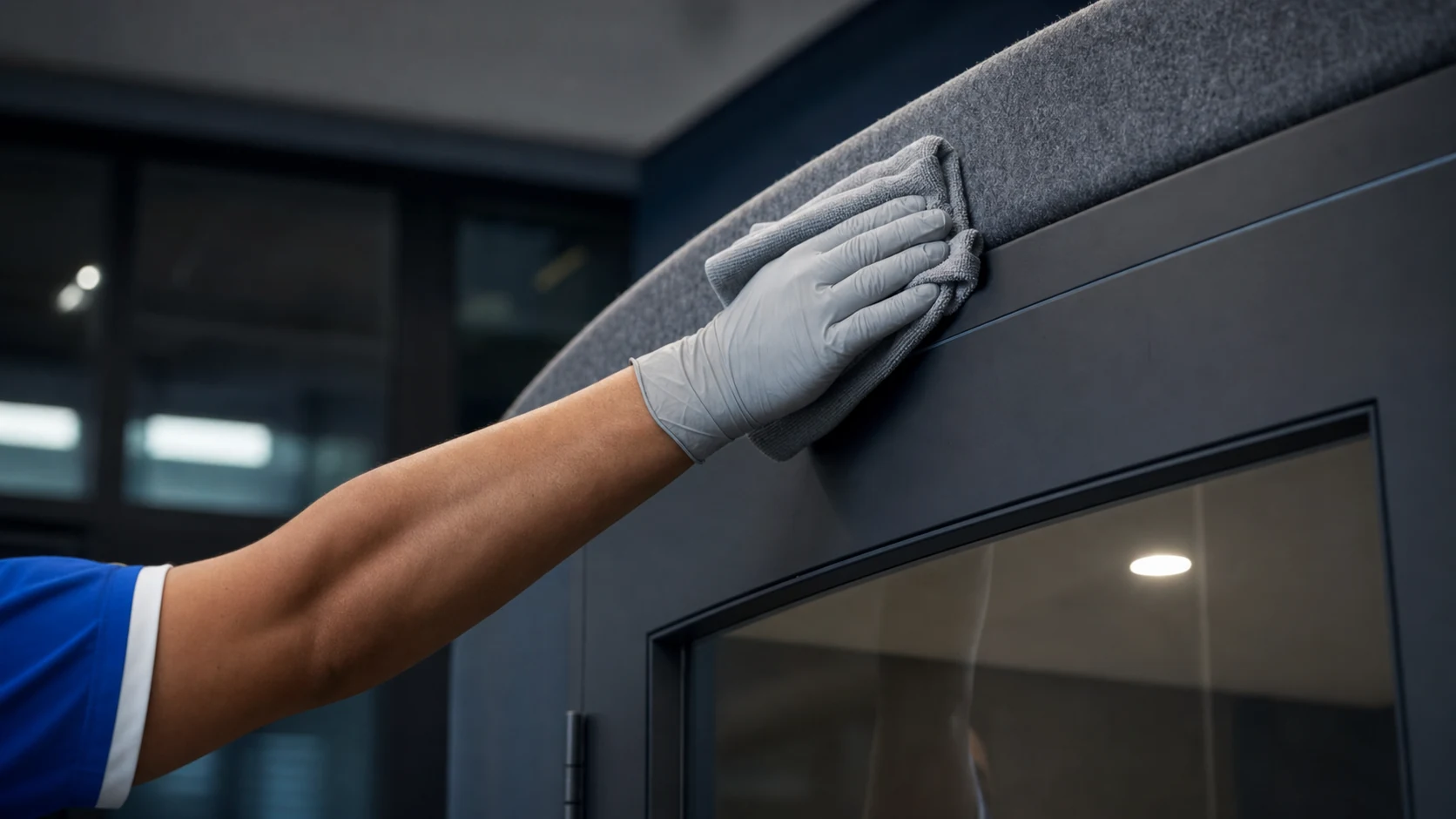
The items most often left unassigned

Floor drains and their surrounds, the space under and behind fixed equipment, wall and ceiling surfaces above working height, cold room floors and door seals, the exterior of production equipment, and waste and washdown areas. Each sits at the boundary, each is unpleasant, and each is regularly assumed to be the other party's job. They are also, collectively, where a hygiene problem starts.

Assign them explicitly with frequencies. A drain cleaned to a stated method weekly is a different proposition from a drain that is technically included in a general floor task. Where a task needs production to stop or equipment to be moved, name who does the moving, because a task that requires an action from someone who is not present will not happen.

Timing and access around production

Contract cleaning in a food production space usually has to occur outside production, which sounds simple until the business runs long or variable hours. The scope should say what happens when production overruns: which tasks are deferred, which are compressed and how that is recorded. Absorbing it silently means the periodic work quietly disappears while the daily work continues. A pattern of overruns is worth raising as a scheduling question rather than a performance one, since the window rather than the contractor is usually what needs changing.

Access and hygiene entry requirements apply to the contractor as much as to staff. Gowning, footwear, hand hygiene and restrictions on what may be brought into the area are set by the business. Clean Best confirms them before pricing, because they affect equipment, time and sometimes whether a task is practical at all in the window available. Confirming those before pricing also avoids a contractor quoting on the assumption of a straightforward entry and then discovering a gowning routine that adds twenty minutes each visit.

Production and contract cleaning split in Marrickville

  • Split written surface by surface, not area by area
  • Drains, equipment undersides and high surfaces explicitly assigned
  • Method and frequency stated for each contracted boundary task
  • Named responsibility for moving equipment where access requires it
  • Entry and hygiene requirements confirmed before pricing
  • Stated approach when production overruns the cleaning window
Clean Best supervisor completing an office cleaning quality check in NSW

Working in Marrickville and the Inner West

Marrickville in the Inner West combines creative businesses, food production, retail and light industry, much of it in converted warehouses and older industrial buildings adapted for new uses. Food producers here often operate in open floor plates where mixing, packing and storage share space, and where drainage, wall finishes and equipment placement reflect the building's earlier life rather than a purpose-built layout. Production hours are frequently long and variable. Clean Best services Marrickville from Seven Hills and draws the split by surface with the production manager present.

Questions about Marrickville

Why should process cleaning stay with production staff?

Because the method is usually tied to the product, may carry a verification step, and depends on knowing what was made and when. A contract cleaner working outside production hours has none of that context. Where a business does want the contractor involved, the training, equipment and method must reflect its food safety system explicitly rather than by assumption.

Which tasks are most often left unassigned?

Floor drains, the space under and behind fixed equipment, high wall and ceiling surfaces, cold room door seals and washdown areas. They sit at the boundary and each party tends to assume the other covers them. Assigning them explicitly with a method and frequency resolves most of the hygiene issues that would otherwise emerge later.

What happens if production runs past the cleaning window?

The scope should say. Options include deferring named tasks, compressing the shift or starting later, each recorded as an exception. What should not happen is silent absorption, because the periodic work disappears first and nobody notices for months. Recording compressed shifts also shows whether the scheduled window is realistic.

Do contractors need gowning and hygiene entry procedures?

Where the business requires it for anyone entering the area, yes, and that requirement should be confirmed before pricing rather than at induction. It affects time, equipment and sometimes the practicality of a task within the available window. The business sets the requirement; the contractor's job is to work within it consistently, including for relief staff.

Can a contractor's records support a food safety audit?

They can evidence the contracted cleaning: tasks, frequencies, completion and exceptions. They cannot evidence the business's own food safety system, process cleaning or verification. Presenting them as though they do creates a gap an auditor will find. Asking what the auditor expects from the cleaning arrangement beforehand makes the records genuinely useful.

Get a fixed written quote for Marrickville

Free walkthrough, scope in writing, price back within 24 hours.

Request a quote
Call nowEmail us