
Miranda NSW 2228

After-hours conduct rules for cleaners in a Miranda retail centre

Conduct rules for after-hours contractors look like housekeeping until you consider what a centre is trusting a stranger with: unlocked tenancies, stock, security systems and an empty building with cameras but nobody watching them in real time.

In short

After-hours conduct rules typically cover identification, permitted areas, use of tenancy facilities, handling of found property, behaviour around stock and merchandise, use of centre equipment, and what happens if a tenancy is found insecure. They are conditions of access rather than preferences.

Clean Best briefs its cleaners on the centre's rules as part of induction and records that briefing. Attending staff are police-checked as an operating standard, and the scope names what a cleaner does if they find a door unlocked, an alarm unset or property that appears to have been left behind.

What the rules are protecting

A centre after close is a large building full of unattended value with very few people in it. Most conduct rules exist because something has happened somewhere: property gone missing, a tenancy left insecure, an area entered that should not have been, an incident that took days to reconstruct because nobody could establish who had been where. The rules are the accumulated response to those events.

Understanding that makes them easier to follow and easier to explain to a cleaner. A rule against entering tenancies not on the cleaning list is not an insult to the individual; it is a boundary that protects them as much as the centre. A cleaner who was demonstrably never in an area cannot be part of any question about it, and that clarity works in everyone's favour. It also gives a contractor something clear to brief, since a rule explained with its reason is followed more consistently than one presented as a restriction.
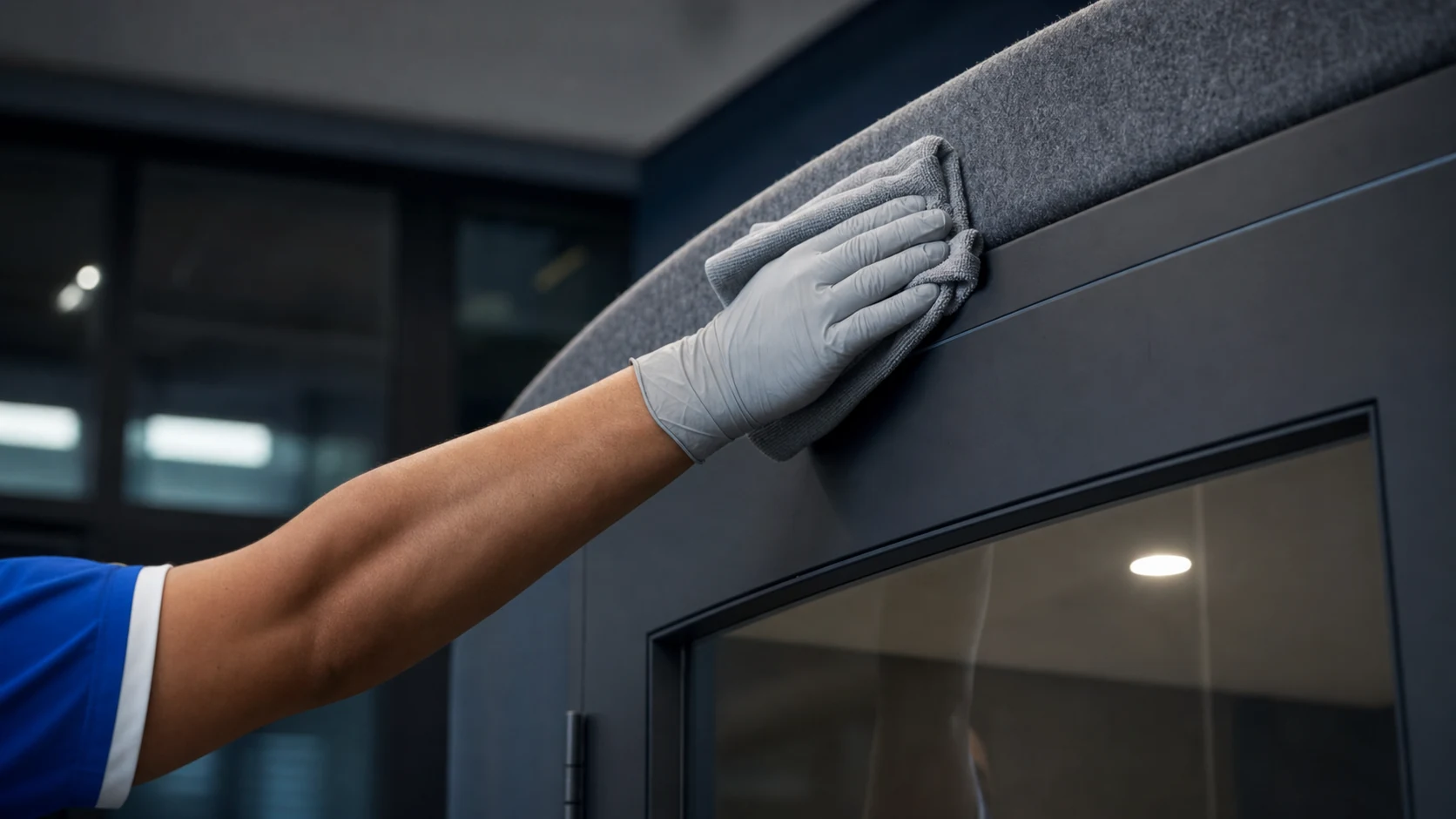
The situations that need a stated answer

Finding a tenancy door unlocked. Finding an alarm unset. Finding property that appears to have been left behind. Encountering someone in the centre who should not be there. Needing to enter an area not on the list because of a spill or a hazard. Each of those will occur eventually, and each needs a stated answer rather than a judgement call at eleven at night.

The answers are usually simple and they should be written: do not enter, secure if possible, contact centre security immediately, record it. Found property in particular needs a defined handling route, because the alternative is an item moving through several hands with no record, which is how an ordinary lost wallet becomes a serious allegation. Agreeing those answers in advance also protects the cleaner, who otherwise carries the decision alone in a building with nobody else in it.

Making the rules survive personnel changes

Conduct rules are briefed at induction and then rely on memory for years. When a replacement or relief cleaner attends, they arrive with the general habits of their trade rather than this centre's specific conditions. That is the moment when most breaches occur, and it is entirely predictable, which means it is manageable with a short re-brief before attendance.

Clean Best confirms who is attending when cover is arranged and repeats the centre-specific briefing, including identification, permitted areas and the found property route. The centre's own induction requirements may also apply to relief staff, and the answer to that varies by centre, so it is worth establishing at mobilisation rather than at the dock. Confirming that once at mobilisation saves a recurring negotiation every time the regular cleaner takes leave.

After-hours conduct arrangements for a Miranda centre

  • Centre conduct rules obtained in writing and briefed at induction
  • Permitted areas listed, with entry elsewhere prohibited
  • Stated response for an unlocked tenancy or unset alarm
  • Defined route for found property, recorded when handed over
  • Identification worn and visible at all times
  • Re-brief before any relief or replacement cleaner attends
Clean Best supervisor completing an office cleaning quality check in NSW

Working in Miranda and the Sutherland Shire

Miranda in the Sutherland Shire is anchored by major retail alongside offices, medical suites and hospitality venues, with a significant share of commercial activity inside managed centres that control contractor access after trading. Those centres run long trading hours, so the cleaning window is compressed and shared with other trades. Tenancies inside them range from small specialty shops to large anchor stores with their own arrangements. Clean Best services Miranda from Seven Hills and briefs centre-specific conduct rules before any cleaner attends.

Questions about Miranda

What should a cleaner do if a tenancy is found unlocked?

Not enter, secure it if that is possible without entering, contact centre security immediately and record the time. The instinct to check inside is understandable and it is exactly what the rule exists to prevent, because a cleaner inside an unsecured tenancy becomes part of any subsequent question about it.

How should found property be handled?

Through a defined route, recorded at handover. An item moving through several hands with no record is how an ordinary lost wallet becomes a serious allegation. The centre will normally have a process; the cleaning contractor's job is to follow it consistently and to note what was found, where and when it was handed over.

Why do centres restrict which areas a cleaner may enter?

Because access boundaries protect the cleaner as well as the centre. A person who was demonstrably never in an area cannot be part of a question about it. The restriction is not a comment on the individual; it is a control that limits the number of people with access to any given space at any time.

Do conduct rules apply to relief cleaners?

Yes, and that is where most breaches occur, because relief staff arrive with general habits rather than this centre's conditions. A short re-brief before attendance addresses it. Whether the centre also requires relief staff to complete its own induction varies, so it is worth establishing at mobilisation rather than at the loading dock.

Is identification really necessary in an empty centre?

Particularly then. Security patrols, other contractors and occasionally tenants are present at odd hours, and an unidentified person is a concern that has to be resolved. Visible identification turns a potential incident into a non-event, and it protects the cleaner from being questioned about their presence repeatedly.

Get a fixed written quote for Miranda

Free walkthrough, scope in writing, price back within 24 hours.

Request a quote
Call nowEmail us