
Campbelltown NSW 2560

Infection control expectations for treatment room cleaning in Campbelltown

In a consulting or treatment room the cleaning contractor is one part of an infection control arrangement that mostly belongs to the practice. Knowing exactly which part avoids both gaps in the room and a contractor being blamed for something outside its scope.

In short

Clinical settings generally separate cleaning into environmental cleaning, performed on a schedule to a defined method, and clinical decontamination of instruments and equipment, performed by clinical staff under the practice's own procedures. A contracted cleaner works in the first category, with clearly stated boundaries around the second.

Clean Best agrees the method, product, frequency and sequence for each room type before starting, and records what was cleaned and when. Clinical staff retain responsibility for instruments, clinical waste handling and any decontamination that forms part of patient care, and the scope states that boundary in writing.

Environmental cleaning and where it stops

Environmental cleaning covers the room itself: floors, high-touch points, examination couches and their surrounds, waiting areas, washrooms and general surfaces. It has a method, a product, a sequence and a frequency, and it can be recorded and checked. Done consistently it is a substantial contribution, and done inconsistently it undermines everything the practice does around it. Setting that boundary in writing also protects the cleaner, who should never be improvising a decision about clinical material at the end of an evening shift.

It stops at anything forming part of clinical care. Instrument reprocessing, sterilising equipment, handling of clinical waste beyond agreed container movement, and cleaning after a procedure where clinical judgement determines the method all belong with the practice. Where a practice wants a contractor to perform a task at that boundary, both the instruction and the training need to be explicit rather than assumed.
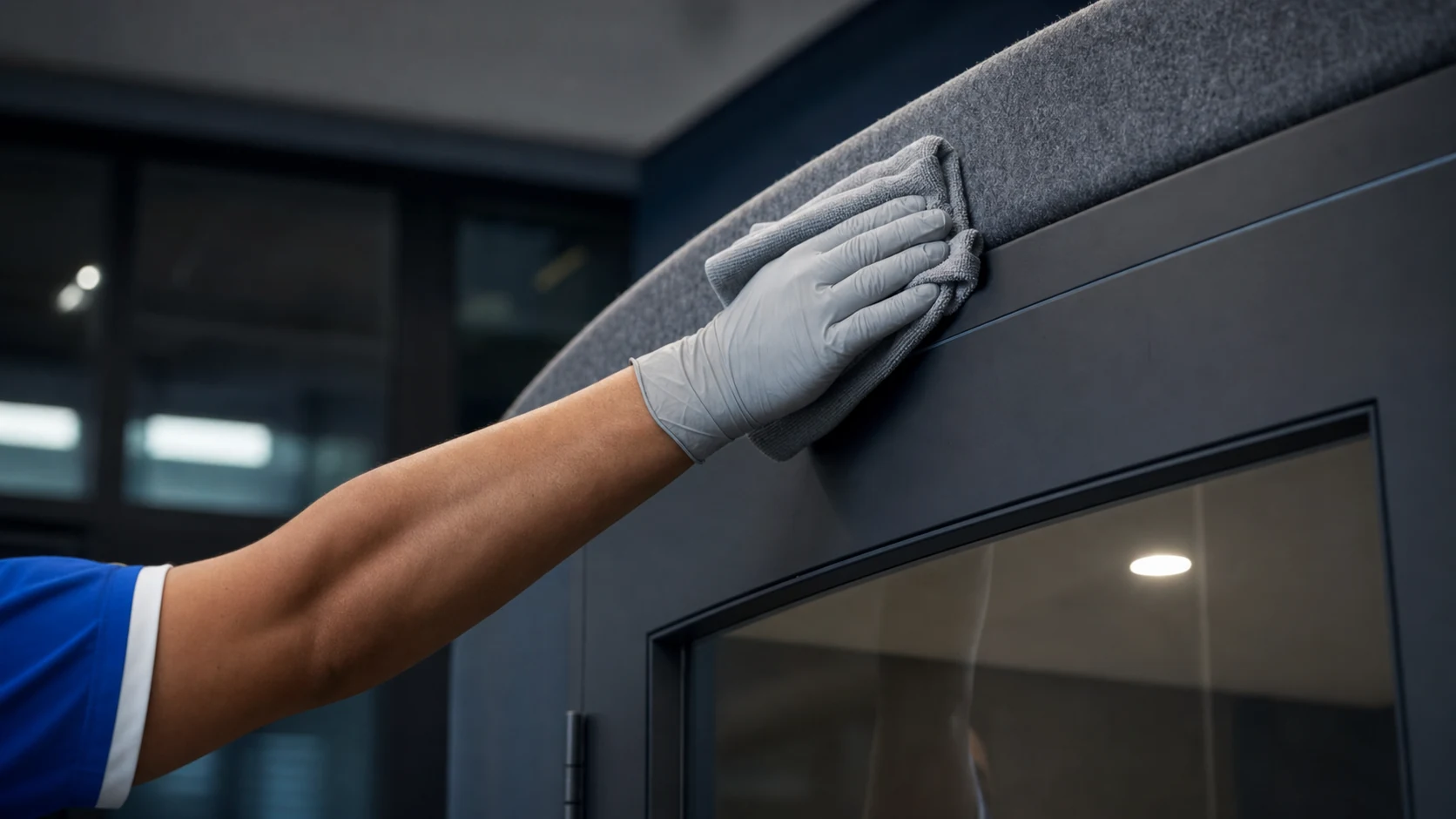
Sequence, products and the parts people get wrong

Order matters more in clinical rooms than anywhere else. Cleaning from lower risk to higher risk areas, and from cleaner to dirtier within a room, is basic but frequently reversed when someone is working quickly. Equipment separation between clinical rooms and washrooms is the other consistent failure. Both are addressed by a written sequence and enough equipment that shortcuts are unnecessary.

Product use is the third. Many products require a stated contact time to work as intended, and wiping a surface dry immediately defeats the method regardless of what was applied. Where a practice specifies a product, the scope should record it along with the contact time. Where it does not, the contractor should state what is used and why, so the practice can check it against its own requirements.

What the record should show

For most clinics a workable record covers which rooms were cleaned on which dates, the method applied, periodic tasks completed, and any exception raised and closed. If a room was inaccessible because it was in use, that should be recorded rather than silently skipped, because the pattern matters when a practice reviews the arrangement. A practice that reviews the record monthly, even briefly, will notice a room that has been unavailable three weeks running long before it becomes a complaint.

Practices preparing for accreditation often need to show that cleaning is scheduled, performed and checked rather than assumed. A short, consistent record answers that far better than an elaborate one produced retrospectively. Clean Best keeps the record in a form the practice can hand over directly rather than in a contractor format that has to be translated first.

Treatment room cleaning arrangements in Campbelltown

  • Written method and sequence for each room type, clean to dirty
  • Products named with their required contact times
  • Equipment separated between clinical rooms, washrooms and general areas
  • Clear boundary stating what remains with clinical staff
  • Record of rooms cleaned, dates, and any room that was inaccessible
  • Periodic tasks scheduled and their completion recorded
Clean Best supervisor completing an office cleaning quality check in NSW

Working in Campbelltown and the Macarthur

Campbelltown in the Macarthur region carries a heavy concentration of healthcare alongside education, retail, government and professional offices, with clinical premises ranging from single-practitioner rooms to multi-suite centres sharing a building with unrelated tenants. Practices here often run extended hours, which compresses the window available for environmental cleaning and makes the sequence and access arrangement more important. Clean Best services Campbelltown from Seven Hills and sets the method with the practice manager rather than applying a general commercial cleaning routine to clinical rooms.

Questions about Campbelltown

Can a cleaning contractor handle clinical waste?

Movement of sealed and correctly segregated containers to a designated storage point can sometimes form part of an agreed scope, but the segregation itself, and anything involving sharps or unsealed clinical material, stays with clinical staff. The arrangement should be written down and matched to the practice's own waste procedure rather than negotiated at the bin.

What happens after a spill of body fluids?

The practice's own procedure governs, and it usually involves clinical staff rather than a cleaner arriving hours later. The cleaning scope should say what the contractor does and does not do in that situation. Where a practice wants the contractor involved, the training, equipment and method need to be agreed and documented in advance, not requested during the event.

Does the cleaner need vaccination or health screening?

Clinical sites often set their own requirements for contractors attending certain areas, and those requirements vary by setting. The practice's position governs. Clean Best confirms what a site requires before mobilisation rather than assuming, and staffs the site with people who meet the requirement rather than seeking an exception after the fact.

How is cleaning scheduled around consulting hours?

Usually after the last appointment, with any daytime attendance limited to waiting areas and washrooms. Practices running extended hours sometimes need a room-by-room approach as rooms free up. The scope should record which rooms are cleaned when, and what happens when a room is unavailable, so an inaccessible room becomes a recorded exception rather than a gap.

Who decides which products are used in clinical rooms?

The practice, in most cases, since it may have requirements from its own accreditation or clinical governance. Where the practice has no specific requirement, the contractor should state what it uses and the contact time involved, so the practice can check it against its expectations. Either way the answer belongs in the written scope.

Get a fixed written quote for Campbelltown

Free walkthrough, scope in writing, price back within 24 hours.

Request a quote
Call nowEmail us