
Haymarket NSW 2000

What a cleaning contractor should report about pest activity in Haymarket

A cleaning contractor is not a pest controller, but the cleaner is almost always the first person to see evidence of activity: droppings behind a bin store, gnaw marks on packaging, activity in a void nobody else opens. What happens with that observation decides how big the problem becomes.

In short

Cleaning and pest management are separate services with a direct relationship. Cleaning removes food sources and harbourage; pest control treats activity. The connection between them is observation and reporting, and the arrangement works when a cleaner's finding reaches the person who can act on it quickly.

Clean Best reports pest observations to the site contact in writing with the location and date rather than treating them as incidental. The scope also records the cleaning tasks that reduce attraction, such as waste area frequency and food debris in specific locations, so the two services support rather than duplicate each other.

What a cleaner sees that nobody else does

Cleaners work behind and under things. Bin rooms, service corridors, kitchen plinths, the gap behind a fridge, storage areas that are opened once a week. Those are exactly the places where activity appears first, and they are areas most staff and managers never look at closely. A cleaner who reports what they see gives a building weeks of warning it would otherwise not have.

The observations worth reporting are concrete: droppings and their location, gnaw damage, nesting material, unusual odours, insect activity, and structural gaps such as a failed door seal or an open penetration. Reporting a sighting is useful; reporting a location and a description is far more useful, because a pest technician can act on it without repeating the search.
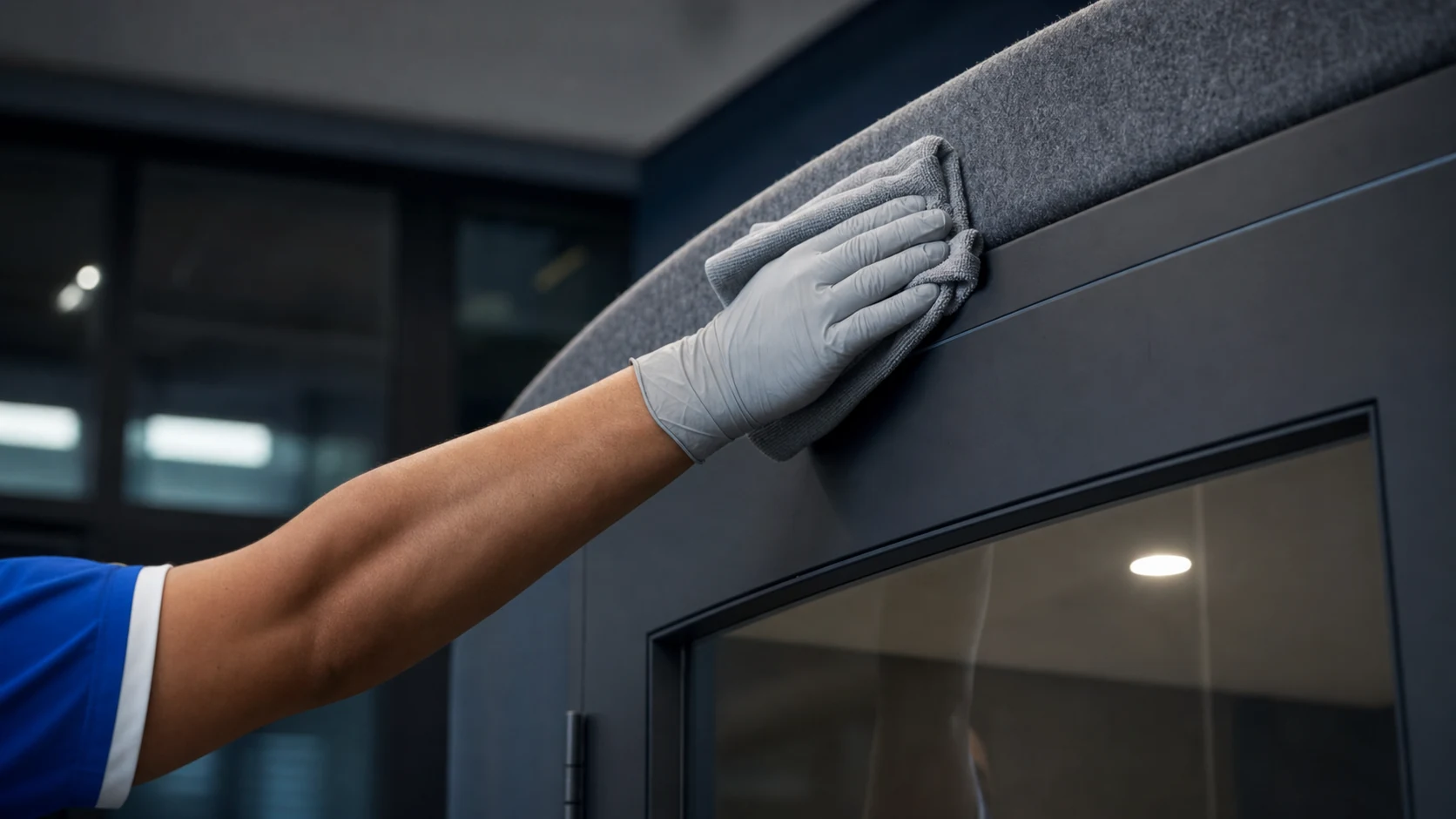
How cleaning and pest control fit together

Treatment without housekeeping change is temporary. Where waste areas are serviced too infrequently, food debris accumulates behind equipment, or external bin areas are not cleaned, activity returns after every treatment. The cleaning scope should name the tasks that reduce attraction with their frequencies, so the housekeeping side of the problem is contracted rather than assumed. Where waste areas are shared, increasing the tenancy's own frequency achieves little if the neighbouring premises is the source, which is a building conversation rather than a cleaning one.

Equally, cleaning cannot solve a structural or supply-side problem. A gap under a rear door, a neighbouring premises with poor waste practice, or a shared bin room in a mixed building will keep producing activity regardless of how well a tenancy is cleaned. Those observations belong to the building or the landlord, and reporting them in writing puts them where they can be acted on.

Making the reporting route work

Reports need a destination and a response. In many buildings pest control is arranged by a different party from the cleaning contractor, sometimes by a landlord or centre management, which means a cleaner's report has to travel before it reaches anyone who can act. Establishing that route at mobilisation, including who to tell and how, prevents observations from stopping at a site contact's inbox.

Keeping a dated record matters here more than in most areas, because pest activity is assessed by pattern. Three reports about the same bin room across two months is a different picture from three unrelated sightings. Clean Best keeps observations dated and located so the record supports a decision rather than describing a series of unconnected events. A short monthly summary of observations, even where nothing significant was seen, is more useful to a technician than an occasional urgent message.

Pest observation arrangements for a Haymarket premises

  • Cleaners briefed on what to report: droppings, damage, nesting, gaps, odours
  • Reports include location and description, not just a sighting
  • Reporting route established to whoever arranges pest control
  • Cleaning tasks that reduce attraction named with frequencies
  • Structural and neighbouring issues reported to the building or landlord in writing
  • Dated record kept so patterns are visible across months
Clean Best supervisor completing an office cleaning quality check in NSW

Working in Haymarket and the Sydney CBD

Haymarket in the Sydney CBD packs retail, education, hospitality and mixed-use buildings into a dense block structure where food businesses, waste areas and service corridors sit close together and are often shared between tenancies. Bin rooms serving multiple premises, rear laneway access and long trading hours all raise the housekeeping stakes, and a problem in one tenancy rarely stays there. Clean Best services Haymarket from Seven Hills and reports observations with location and date so the building can act on the pattern rather than on isolated sightings.

Questions about Haymarket

Does a cleaning contractor provide pest control?

Not as part of general cleaning. Pest control is a separate licensed service with its own requirements. What a cleaning contractor contributes is housekeeping that reduces food sources and harbourage, and observation that gives early warning. Confusing the two leads to a building assuming it has pest management when it has only cleaning.

What should a cleaner report and how quickly?

Droppings, gnaw damage, nesting material, insect activity, unusual odours and structural gaps, with the location and a short description, reported by the next business day. Anything affecting a food area or suggesting significant activity warrants the same day. The location detail is what makes the report actionable rather than merely alarming.

Who should receive pest reports in a shared building?

Whoever arranges pest control, which may be the tenant, the landlord or centre management. That route should be established at mobilisation, because a report that stops at a site contact who cannot act achieves nothing. In shared bin room situations the building manager usually needs to know regardless of who arranges treatment.

Can more frequent cleaning solve a pest problem?

It can remove attraction, which is a substantial part of the answer, but it cannot address structural gaps, neighbouring premises or supply-side sources. Where those exist, treatment and building works are needed alongside housekeeping. A scope that increases frequency without addressing a failed door seal will not resolve the underlying issue.

Should pest observations be kept as a record?

Yes, dated and located. Pest activity is assessed by pattern rather than by individual sightings, and a record spanning months is far more useful to a technician than a series of verbal mentions. It also demonstrates that the building responded to what it was told, which matters if the issue escalates.

Get a fixed written quote for Haymarket

Free walkthrough, scope in writing, price back within 24 hours.

Request a quote
Call nowEmail us