
Merrylands NSW 2160

Waste segregation and bin room records in a Merrylands mixed-use building

The bin room is where a building's cleaning arrangement is tested hardest and documented least. It serves several parties, it is used at all hours by people with no shared instructions, and the consequences of getting it wrong arrive as a contamination charge or a pest problem.

In short

Waste handling in a shared building involves segregation into the correct streams, presentation of bins for collection, cleaning of the bin room itself, and reporting of contamination or overflow. Those are four separate responsibilities and they are frequently assumed to be one.

Clean Best writes each into the scope with a frequency and a responsible party, and reports contamination and overflow rather than simply correcting it. The record shows what was found as well as what was done, which is what allows a building to address the cause rather than absorbing the cost indefinitely.

Four responsibilities, often treated as one

Segregation happens where waste is generated, by occupants and staff, and no amount of bin room cleaning fixes a building where waste is sorted incorrectly upstairs. Presentation is a timing task tied to collection days. Bin room cleaning is a hygiene task with its own frequency and method. Reporting is the feedback loop that lets someone address recurring contamination.

Bundling all four into a line saying the contractor manages the bin room guarantees confusion. It also means nobody is accountable for the one that matters most, which is segregation at source. Naming the four separately, with the responsible party against each, is a short piece of drafting that resolves most bin room disputes before they occur. It also gives the building a single line to point at when a new tenant asks who handles what, which is a question that arrives with every tenancy change.
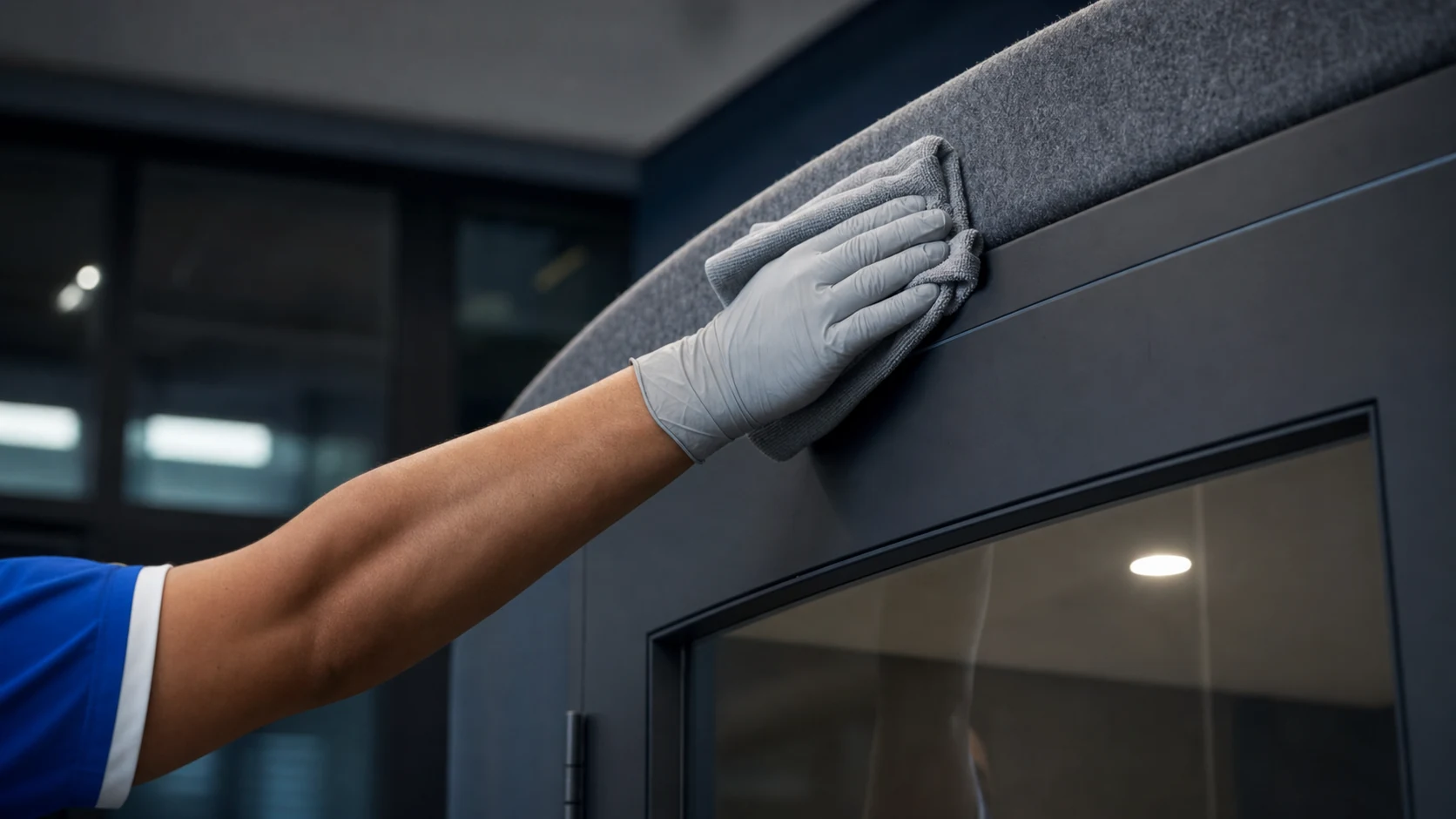
The bin room itself

Bin rooms need a specific cleaning method and frequency because they combine organic waste, moisture, restricted ventilation and heavy traffic. Washdown frequency, floor and wall treatment, drainage, bin exterior cleaning and odour management all belong in the scope with intervals. A bin room described only as cleaned weekly will not stay acceptable in a building with food tenancies.

Access and safety matter too. Bin rooms often have heavy doors, limited lighting, awkward bin movement and a floor that is wet more often than not. Those are manual handling and slip issues, and they are frequently the worst conditions in an otherwise well-maintained building. Raising them is worthwhile because the fixes are usually small: a door stay, a light, a better bin size. Raising them once, in writing, with a suggested fix is usually more effective than mentioning them repeatedly, since a written request can be costed and scheduled.

Contamination, overflow and the record

Contamination charges and rejected collections are a real cost, and they are usually caused by a small number of repeated behaviours rather than by everyone. A record noting which stream was contaminated, with what, and when, gives the building something to act on. Without it, the response is a general notice to all occupants, which reliably has no effect.

Overflow should be recorded the same way. A bin that is consistently full before collection day means the capacity or the collection frequency is wrong, not that the cleaner failed. Clean Best reports both rather than quietly rearranging waste to make it fit, because the rearranging hides the problem and the problem grows. Where a building charges contamination costs back to occupiers, that record is also what allows the charge to fall on the source rather than across everyone.

Waste arrangements for a Merrylands building

  • Segregation, presentation, bin room cleaning and reporting assigned separately
  • Bin room cleaning method and frequency stated, including washdown
  • Bin exterior cleaning and odour management included with intervals
  • Access, lighting and manual handling conditions raised with the building
  • Contamination recorded by stream, substance and date
  • Overflow recorded rather than absorbed by rearranging waste
Clean Best supervisor completing an office cleaning quality check in NSW

Working in Merrylands and the Cumberland

Merrylands in the Cumberland area combines retail, offices, healthcare and a growing stock of high-density mixed-use buildings, many with commercial tenancies at ground level and residents above sharing a single waste facility. Bin rooms in that configuration serve users with different waste profiles and no common instructions, and are frequently sized for the building as originally designed rather than as currently occupied. Clean Best services Merrylands from Seven Hills and separates the four waste responsibilities in the scope rather than describing them as one.

Questions about Merrylands

Can a cleaning contractor fix contamination in recycling bins?

It can correct what it finds, but the cause is upstream where waste is sorted. Correcting without reporting means the behaviour continues and the cost recurs indefinitely. Recording which stream was contaminated, with what, and when gives the building something specific to act on rather than issuing a general notice that changes nothing.

How often should a bin room be cleaned?

It depends on the waste profile, and a building with food tenancies needs considerably more than one without. Washdown frequency, bin exterior cleaning and odour management should each carry an interval rather than sitting inside a general weekly task. Reviewing after the first few months is sensible because the initial estimate is rarely right.

Who is responsible for presenting bins for collection?

Whoever the scope names, and it must name someone. Presentation is a timing task tied to collection days rather than a cleaning task, and it is regularly assumed to be included when it is not. In buildings where collection times vary, it also needs a fallback for when a collection is missed.

What if bins are full before collection day?

That should be recorded as an overflow rather than resolved by compacting or rearranging. Consistent overflow means the capacity or the collection frequency does not match the building's actual use, which is a decision for the building. Absorbing it hides the problem and it grows, usually until a collection is rejected.

Are bin rooms a safety issue for cleaners?

Frequently. Heavy doors, poor lighting, wet floors and awkward bin movement combine into the worst conditions in many otherwise well-maintained buildings. The fixes are usually small and cheap: a door stay, better lighting, a more suitable bin size. Raising them is worthwhile because they affect every visit rather than occasionally.

Get a fixed written quote for Merrylands

Free walkthrough, scope in writing, price back within 24 hours.

Request a quote
Call nowEmail us