
Cronulla NSW 2230

Change room and fitness floor hygiene evidence for a Cronulla venue

Members judge a fitness or hospitality venue by its change rooms more reliably than by anything else in the building. That judgement is formed during the day, between cleans, which is why a single overnight service and no daytime record is the arrangement most likely to produce complaints.

In short

Hygiene evidence in wet areas covers what was cleaned, how often, and what happened between scheduled visits. For change rooms, showers and fitness floors the record needs to show frequency during operating hours rather than only a completed nightly task, because that is when the condition is observed.

Clean Best builds the scope around the venue's actual usage pattern, separating the overnight service from any daytime attendance, and records both. Periodic tasks such as grout and drain detail, ventilation grille cleaning and equipment surrounds are scheduled with intervals and their completion recorded rather than left to judgement.

Why the overnight clean is not the whole answer

A wet area cleaned thoroughly at eleven at night is in excellent condition at six the next morning and in variable condition by two in the afternoon. Nothing about the overnight clean is wrong; the issue is that the condition members experience is largely determined by what happens during the day. A scope that addresses only the overnight service is answering a question nobody asked.

The practical response is a daytime presence sized to the venue rather than a heavier night shift. That might be a short mid-day attendance, a defined check at peak change-over, or a staff routine with the contractor covering the deeper work. Which of those suits depends on the usage pattern, and the walkthrough is where that pattern is observed rather than assumed.
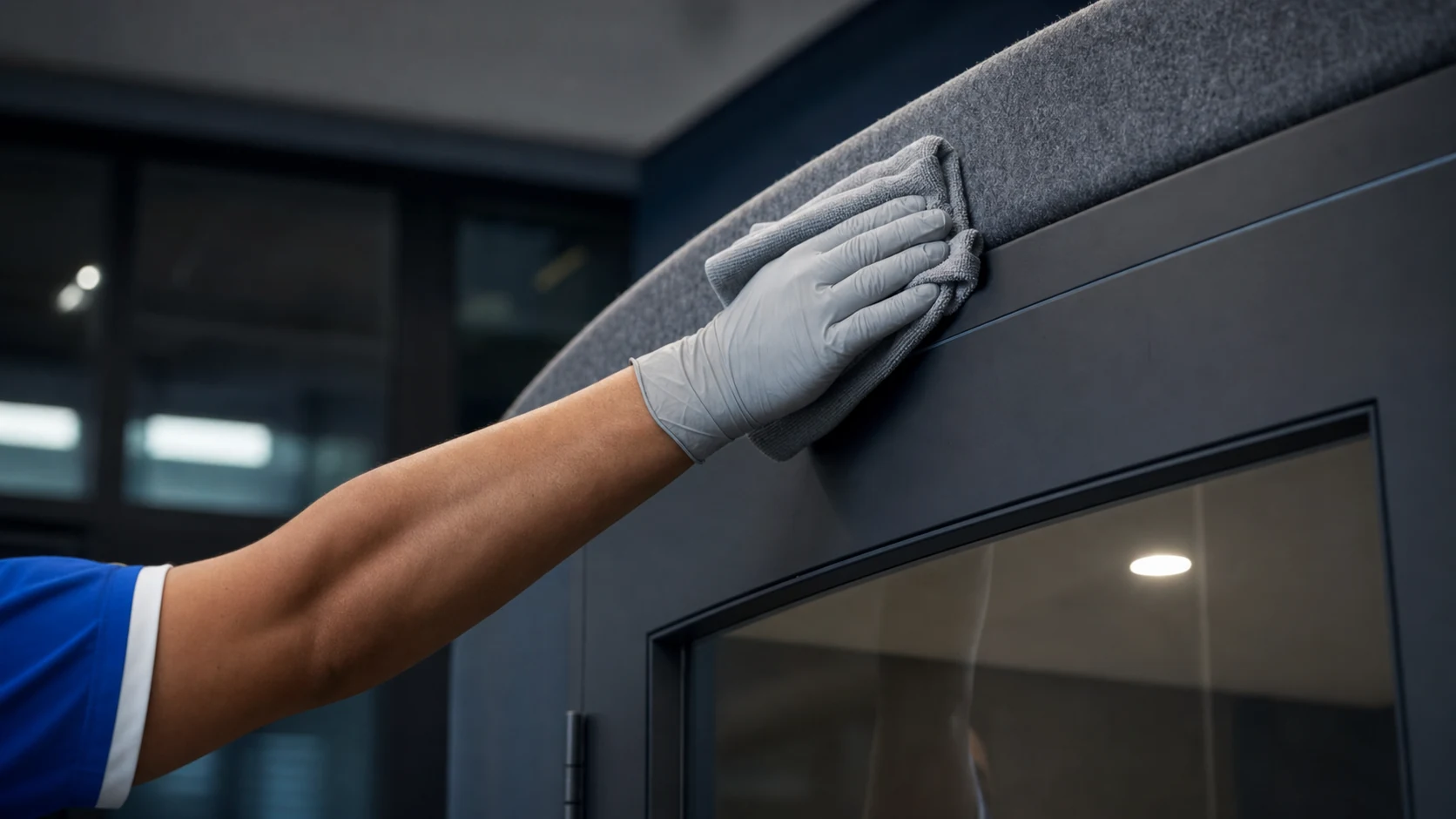
The tasks that decide how a wet area ages

Daily cleaning maintains appearance. Periodic work determines how the space looks in two years. Grout condition, drain and waste detail, shower screen treatment, ventilation grilles, the underside and back of bench seating, and the junction between floor and wall are the items that deteriorate slowly and expensively. None of them are visible as a daily failure, which is exactly why they get skipped.

Each should carry an interval and a completion record. Recording the last completion date also protects the budget in both directions: work repeated too soon is wasted, and work missed entirely becomes a restoration cost. Where a venue is planning a refurbishment, that same record shows which areas were maintained and which were not, which is useful when deciding what actually needs replacing.

Evidence that answers a member complaint

When a complaint arrives, the useful record is short: what was scheduled, whether it happened, what was found at the last check, and what was done in response. A venue that can answer within an hour handles the complaint. One that cannot ends up either apologising for something that did not occur or defending something it cannot verify. The same record also supports a decision about refurbishment, since a venue can see which spaces were maintained on cycle and which were not.

Clean Best keeps that record against the scope rather than as a separate report, so the answer comes from the same document that priced the work. Exceptions found by our own supervisors are logged alongside those reported by the venue, which gives an accurate picture of the space rather than a record of how often someone happened to complain. Keeping both sets in one place also stops the arrangement being judged solely on the weeks when someone happened to be paying attention.

Hygiene records for a Cronulla change room

  • Scope separating overnight service from any daytime attendance
  • Daytime check times matched to the venue's actual peak usage
  • Periodic tasks listed with intervals: grout, drains, grilles, bench undersides
  • Completion dates recorded for every periodic item
  • Exception log covering both member reports and supervisor findings
  • Consumable stocking responsibility named for each area
Clean Best supervisor completing an office cleaning quality check in NSW

Working in Cronulla and the Sutherland Shire

Cronulla in the Sutherland Shire supports hospitality, retail, fitness and professional premises in a coastal town centre with strong seasonal variation. Venues here see beach traffic through change rooms and washrooms, which brings sand and salt into wet areas and accelerates wear on grout, fittings and drainage. Summer usage can be several times winter levels in the same space. Clean Best services Cronulla from Seven Hills and sets frequency against the venue's seasonal pattern rather than applying one figure across the year.

Questions about Cronulla

How often should change rooms be checked during the day?

It depends on usage rather than on a standard interval. A venue with a strong morning and evening peak may need attention after each, while a steadier pattern suits a single mid-day check. The walkthrough should observe the actual pattern, and the frequency should be reviewed after the first season because the initial estimate is rarely exactly right.

Who stocks consumables in the change rooms?

Whoever is named in the scope, and it must be named. Consumable stocking is the single most common source of confusion in wet areas, because it needs doing more often than cleaning and it is visible immediately when missed. Recording who stocks what, and who orders replacement supply, removes a recurring argument at very little cost.

Does seasonal usage justify changing the frequency?

In a coastal venue, usually yes. Applying an annual average produces a service that is excessive in winter and inadequate in summer. Writing a seasonal uplift into the scope, with the months and the change stated, is more honest than either over-servicing year round or handling summer through complaints and ad hoc requests.

What periodic work matters most in a wet area?

Grout and floor-to-wall junctions, drains and waste outlets, ventilation grilles and the underside of fixed seating. These deteriorate slowly, are not visible as daily failures, and become expensive once neglected. Each should have a stated interval and a recorded completion date rather than being described as done as required.

How should a member complaint be handled?

By checking the record first, then responding with what actually happened. If the scheduled service occurred and the condition still failed, the frequency or method needs changing rather than the cleaner being told to try harder. If it did not occur, that is a different conversation. Either way the record turns an argument into a decision.

Get a fixed written quote for Cronulla

Free walkthrough, scope in writing, price back within 24 hours.

Request a quote
Call nowEmail us