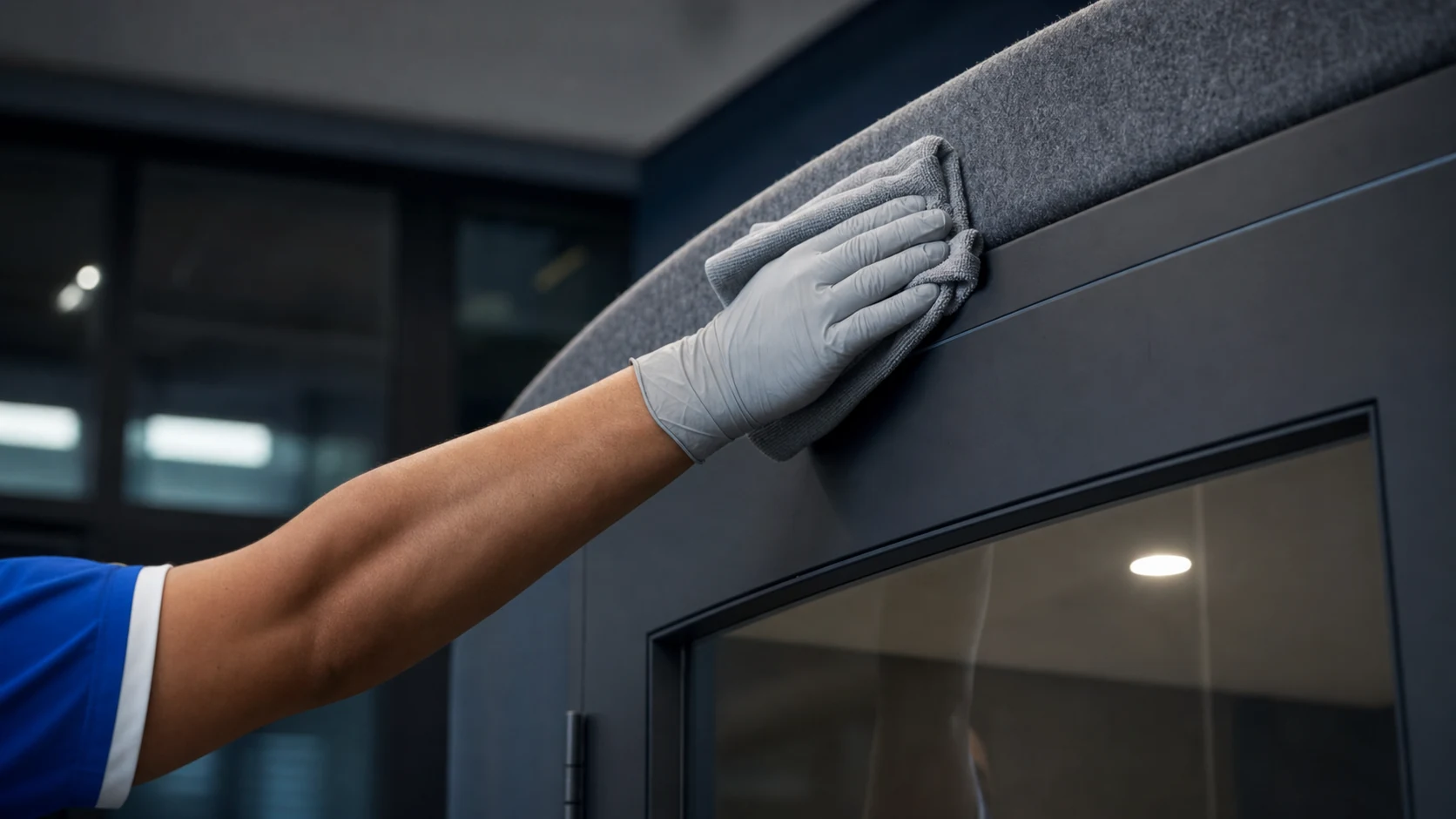
What makes a collection room different
Turnover is the main factor. A collection room may see thirty or forty patients in a morning, each contacting the chair, the armrest, the bench and the door handle. Those high-touch surfaces are cleaned by clinical staff between patients as part of the practice's own routine; the contractor's role is the environmental clean at the end of the session, which needs to be thorough because the room has been in continuous use.
The second factor is what can be present. Sharps containers, specimen handling areas and the possibility of a spill all mean a cleaner working in the room needs a clear boundary. That boundary should be written rather than assumed, because a cleaner who encounters something unexpected in a small clinical room at the end of a long day should be following an instruction rather than making a judgement.