
Rockdale NSW 2216

Photographic cleaning evidence and privacy considerations in Rockdale

Photographic evidence is the fastest way to settle a question about condition and the easiest way to create a problem nobody anticipated. In an occupied building a photograph of a desk captures documents, screens and sometimes people, none of which anyone intended to record.

In short

Photographs are valuable for periodic work, condition disputes, damage and exceptions, where a written description is ambiguous. They are less useful as routine daily evidence and they raise questions about what else is captured, who can access the images and how long they are kept.

Clean Best agrees the photography arrangement in the scope: what is photographed, what is avoided, who receives the images and how long they are retained. Where a premises holds sensitive material or personal information, the default is to photograph condition rather than content, and to avoid occupied areas entirely.

Where photographs genuinely help

Periodic work is the clearest case. Carpet extraction, floor treatment, high-level cleaning and external work are expensive, infrequent and invisible once complete, which makes them the most disputed items in any arrangement. A before and after image with a date resolves the question permanently at a cost of about thirty seconds. Photographs also help where a periodic task is performed over several nights, since the record shows which areas were completed on which visit rather than presenting the work as a single event.

Damage and pre-existing condition are the second case. A mark noticed on arrival, photographed and reported, cannot later be attributed to the cleaning shift. Exceptions are the third: an image attached to a corrective action removes any ambiguity about which item is meant and usually shortens the discussion about whether it has been resolved. It also prevents the situation where two people are describing different marks in the same corridor and neither realises it.
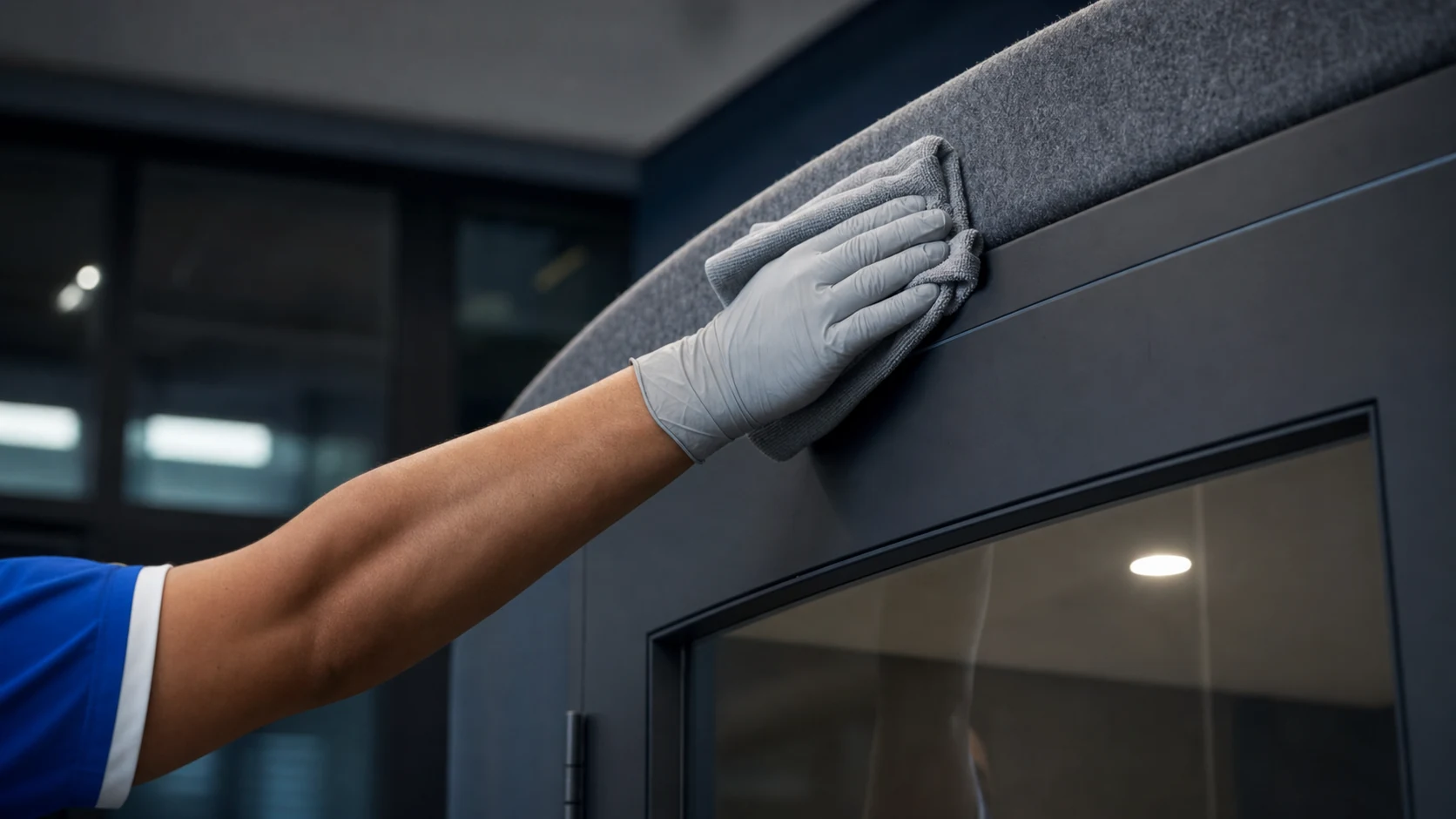
What a photograph captures beyond its subject

A photograph of a floor in an open office captures desks, and desks carry documents, screens, personal items and sometimes identifiable information. In a clinical setting the exposure is more serious again. Nobody intends this; it is simply what a wide shot in an occupied building contains, and the images then sit in a phone gallery, an email chain and possibly a cloud service.

The practical controls are simple. Photograph the specific subject rather than the room. Avoid areas with visible documents or screens, or photograph them from an angle that excludes the content. Do not photograph people. Where a premises has particular sensitivity, agree the areas where photography does not occur at all, and record that in the scope. Where a client wants routine visual confirmation, photographing an empty corridor or a plant area achieves it without capturing anything else at all.

Handling and retention

Images should go to the agreed recipient and not circulate further. That means naming who receives them and avoiding personal devices as a storage location, which is where most cleaning photographs actually live. Retention should be long enough to serve the purpose, which for periodic work means until the next cycle and for damage matters somewhat longer. Naming the recipient by role rather than by individual also means the arrangement survives a change of manager without images quietly continuing to a former address.

Clean Best records the arrangement rather than leaving it to individual practice, because the practice varies enormously between people otherwise doing the same job. A client with specific requirements, particularly in clinical, education or legal settings, should state them at mobilisation rather than after seeing an image they were not expecting.

Photographic evidence arrangements for a Rockdale site

  • Photography used for periodic work, damage, condition and exceptions
  • Not used as routine daily evidence in occupied areas
  • Subject photographed specifically rather than the room
  • Areas excluded from photography named in the scope
  • Named recipient, with images not circulating further or stored on personal devices
  • Retention period agreed and matched to the purpose
Clean Best supervisor completing an office cleaning quality check in NSW

Working in Rockdale and the St George

Rockdale in the St George area combines retail, offices, healthcare and mixed-use commercial buildings, including medical suites and professional practices holding client and patient information alongside general commercial tenancies. Buildings frequently place those uses on adjacent floors sharing a lift core and common areas, so a single contractor may move between very different sensitivity levels in one shift. Clean Best services Rockdale from Seven Hills and agrees the photography arrangement per premises rather than applying one practice across a portfolio.

Questions about Rockdale

When are cleaning photographs most useful?

For periodic work, damage, pre-existing condition and exceptions, where a written description is ambiguous or where the work becomes invisible once complete. A dated before and after image resolves the most disputed category in cleaning permanently. As routine daily evidence they add volume without adding much information.

What is the privacy concern with cleaning photographs?

A wide shot in an occupied building captures far more than its subject: documents, screens, personal items and sometimes people. The images then sit in a phone gallery, an email chain and possibly a cloud service. Nobody intends it, which is why the controls need to be agreed rather than left to individual judgement.

How should photographs be taken to reduce exposure?

Photograph the specific subject rather than the room, avoid angles that include documents or screens, and never photograph people. Where a premises is particularly sensitive, agree the areas where photography does not occur at all. These are small habits that remove almost all of the exposure without reducing the evidential value.

Where should the images be stored?

With the agreed recipient, in the client's own records where possible, rather than on a cleaner's personal device. Personal devices are where most cleaning photographs actually live, which is the least controlled option available. Naming the recipient and the storage location in the scope is a short piece of drafting with a real effect.

Should clinical or education premises allow photography?

Only under conditions they set, and those conditions should be explicit. Many will permit photographs of floors, plant and empty rooms while excluding any area where records or people may be captured. Stating that at mobilisation is far better than discovering the practice afterwards, when an image has already been taken.

Get a fixed written quote for Rockdale

Free walkthrough, scope in writing, price back within 24 hours.

Request a quote
Call nowEmail us