
Homebush West NSW 2140

What a food auditor looks for in a Homebush West market or food premises

Auditors rarely fail a food premises because a surface was dirty on the day. They raise findings because a surface cannot be kept clean, or because nothing shows that it was cleaned on any of the days they did not visit. Those are different problems with different answers.

In short

A food premises audit generally examines three things in relation to cleaning: whether the structure and equipment can be cleaned effectively, whether a documented cleaning schedule exists and is followed, and whether records support that. The condition on the day is evidence, not the whole assessment.

Clean Best contributes the second and third: a written schedule stating task, area, method and frequency, and a record of completion including periodic work. Structural cleanability, food handling practice and the business's own food safety system remain with the operator, and the scope states that boundary.

Cleanability comes before cleaning

If a surface cannot be reached, a junction is unsealed, a floor coating has failed or equipment sits directly on the floor with no clearance, then no cleaning frequency will produce a good result. Auditors know this and look for it, which is why a finding often concerns the structure rather than the housekeeping. Increasing cleaning frequency in response is a common and largely ineffective reaction.

A cleaning contractor is well placed to identify these issues because they meet them every visit. A gap that cannot be cleaned, a floor junction holding water, a piece of equipment that has to be moved by two people and therefore never is. Reporting those in writing gives the operator a maintenance list and, if the finding later appears in an audit, evidence that it was raised.
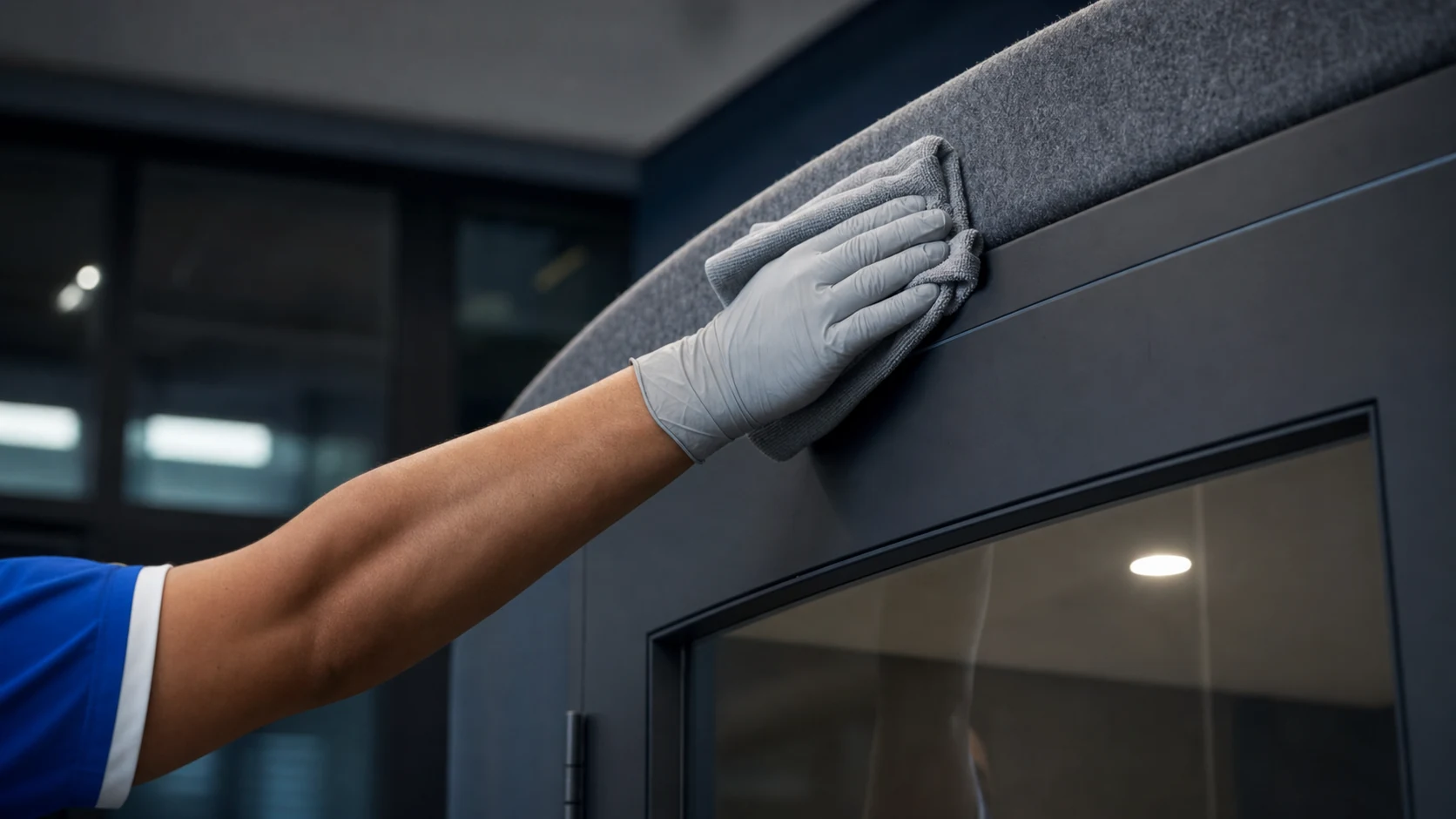
The documented schedule an auditor expects to see

It should state the area, the task, the method or product, the frequency and who performs it. The last field matters most in premises where cleaning is split between staff and a contractor, because a schedule that does not say who does what leaves the gap an auditor is looking for. Both parties' tasks should appear in one document rather than in two that were never compared.

Frequencies should be specific. Daily, after each service, weekly, monthly, quarterly. Phrases such as as required or regularly are the weakest entries in any schedule because they cannot be checked. Where a task genuinely depends on use, state the trigger explicitly: after each delivery, after each cook, at the end of trade. A trigger is checkable in a way that regularly is not.

Records that stand up on the day

The record needs to be contemporaneous and it needs to include periodic work. Daily sheets alone rarely satisfy an auditor's question about the deep clean cycle, and periodic tasks are the ones most likely to have lapsed. Completion dates against each periodic item, with any exceptions and their resolution, cover most of what is asked. Where a schedule has been revised, keeping the superseded version dated shows what applied during the earlier period rather than implying the current one always did.

Records should also be locatable during the visit. An auditor asking for the last extraction canopy clean does not want to wait for an email from a contractor. Clean Best provides records to the client as they are produced, and in a form the operator can hand across directly rather than needing to interpret or reformat first. Agreeing the storage location at mobilisation avoids the familiar scene of an operator searching an inbox while an auditor waits at the bench.

Cleaning documentation for a Homebush West food premises

  • One schedule covering both staff and contractor tasks in the same document
  • Area, task, method, frequency and responsible party against every line
  • Specific frequencies or triggers rather than as required
  • Periodic tasks listed with intervals and completion dates recorded
  • Cleanability issues reported in writing as a maintenance list
  • Records held on site and locatable during an audit visit
Clean Best supervisor completing an office cleaning quality check in NSW

Working in Homebush West and the Central West

Homebush West in the Central West is known for its markets, warehouses, retail and food-related businesses, where produce handling, cold storage and high-volume throughput sit alongside general commercial space. Premises of that type combine washdown areas, loading zones and food handling in close proximity, and structural cleanability is often constrained by buildings adapted from other uses. Delivery patterns can be early and intense. Clean Best services Homebush West from Seven Hills and separates what it can deliver as contracted cleaning from what belongs to the operator's own food safety system.

Questions about Homebush West

Can a cleaning contractor be responsible for an audit finding?

It can be responsible for a contracted task that was not performed, which is why the schedule and the records matter. It cannot be responsible for the operator's food safety system, structural cleanability or handling practice. Separating those clearly in the scope protects both parties and, more importantly, makes it obvious who needs to act on a finding.

What is the most common cleaning-related finding?

Areas that cannot be cleaned effectively because of structure or equipment placement, followed by periodic tasks with no evidence of completion. Both are addressed before the audit rather than during it. Reporting cleanability issues in writing as they are noticed builds the maintenance list and demonstrates the issue was identified rather than ignored.

How detailed should a cleaning schedule be?

Detailed enough that someone unfamiliar with the premises could follow it. Area, task, method, frequency and who performs it. Anything vaguer leaves interpretation to whoever is on shift, which produces variation. Anything more elaborate tends not to be maintained, which is worse than a shorter schedule that is actually followed.

Should staff and contractor tasks be in one document?

Yes. Two separate schedules produce gaps at the boundary, and the boundary is where auditors look. A single document listing every task with the responsible party is simple to produce and immediately reveals anything that has not been assigned. It also helps when staff change and the split needs re-explaining.

Where should cleaning records be kept?

On site, with the operator's other food safety documentation, so they can be produced during a visit without contacting anyone. Records held only in a contractor's system are unavailable at exactly the moment they are needed. Clean Best supplies records as they are produced rather than storing them for later request.

Get a fixed written quote for Homebush West

Free walkthrough, scope in writing, price back within 24 hours.

Request a quote
Call nowEmail us