
Chullora NSW 2190

Site induction and protective equipment for cleaners on a Chullora distribution floor

Distribution centres induct contractors properly because the consequences of not doing so are obvious on their floor. Cleaning is occasionally treated as an exception to that discipline, usually because the work happens at night, and that exception is where problems start.

In short

A site induction gives a contractor the information needed to work safely at a specific premises: layout, hazards, pedestrian routes, emergency procedures, exclusion zones, reporting contacts and site-specific rules. For a distribution floor it also covers plant movement, protective equipment and the areas where cleaning is only permitted at certain times.

Clean Best completes the site induction for every cleaner who attends and records it, including replacement and relief staff. Where the site sets protective equipment requirements beyond the ordinary standard, we confirm them at the walkthrough so the requirement is met on the first shift rather than discovered at the gate.

What a cleaning induction should cover that a generic one does not

Generic inductions cover emergency exits and site rules, which is necessary but not sufficient for cleaning. The cleaning-specific content is about where the work happens and when: which aisles are accessible at which times, whether racking areas can be entered, how the dock apron is treated, where water can and cannot be used, and which areas are excluded entirely. Those answers are the actual content of a cleaning induction.

It should also cover the site's expectations of a cleaner encountering something unexpected. A pallet left in a walkway, a spill of unknown material, a damaged rack upright, a fire door blocked. A cleaner working alone at night needs to know whether to act, report or withdraw, and the default should be reporting rather than problem-solving. Writing that into the induction removes the improvisation.
Protective equipment and who provides it

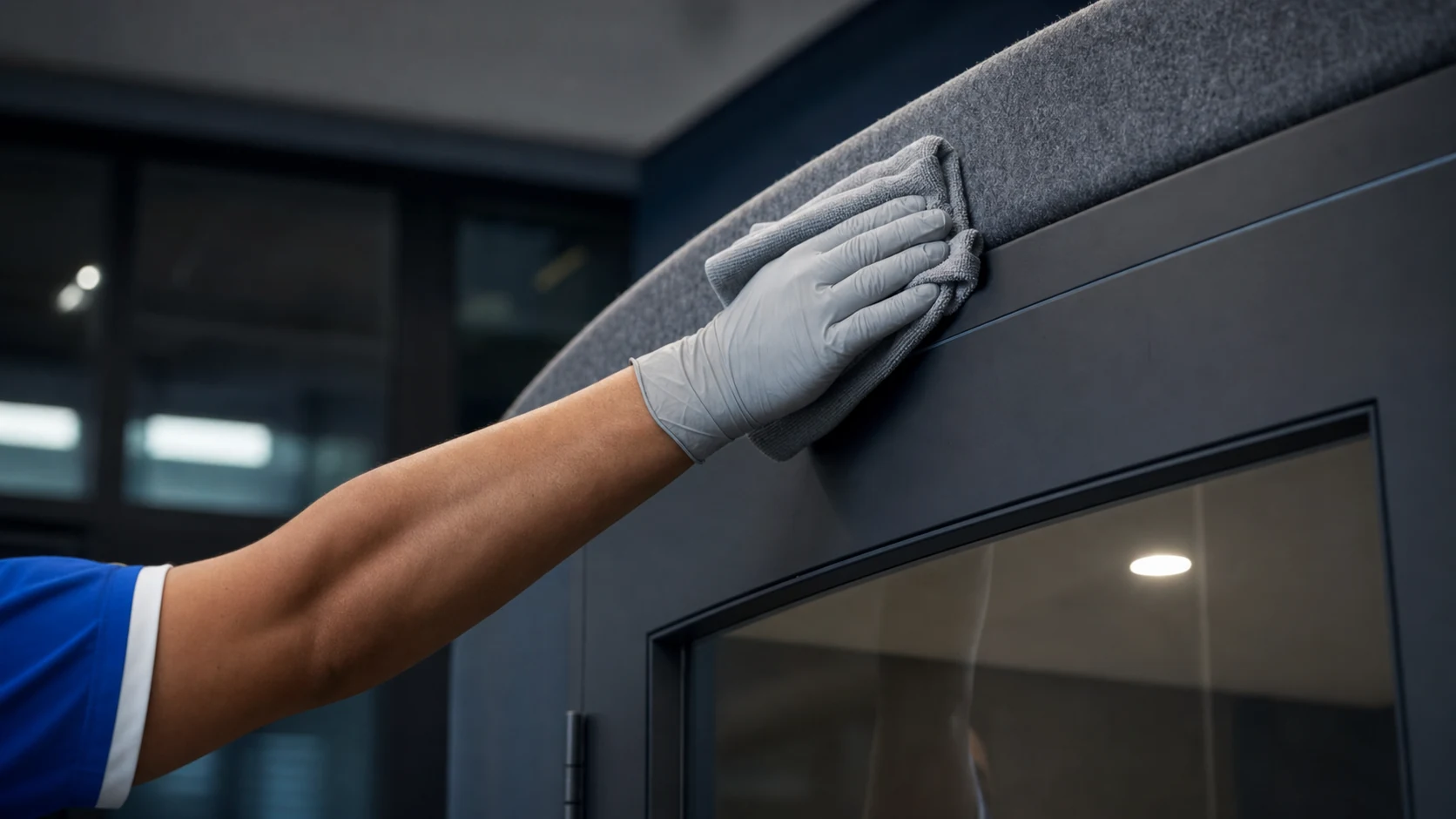
The contractor equips its own people, and the site specifies the standard required to enter. Both parties assume the other has this covered more often than either would expect. Confirming the specific requirement at the walkthrough, including the class of high-visibility clothing, footwear, eye protection where chemicals are used and hearing protection where relevant, prevents an approval failure on the first night.

Equipment also needs to be usable in the actual conditions. A distribution floor at two in the morning is a different environment from a daytime office, and gear that is unusable is gear that gets removed. If the site's requirement conflicts with the practical demands of the cleaning task, that conversation should happen at the walkthrough with the site's safety contact rather than being resolved privately by a cleaner.

Keeping induction current as people and layouts change

Induction is per person and per layout, and distribution sites change layout more often than most premises. A racking reconfiguration, a new dock allocation, an added automation line or a seasonal storage overflow all change the environment a cleaner was inducted into. A short re-brief when the floor changes materially is far more useful than an annual refresher scheduled by calendar. Agreeing that the site flags material changes to the contractor, rather than waiting to be asked, keeps the briefing aligned with the floor as it currently stands.

Relief attendance is the other pressure point. A site that requires induction before entry cannot accept an uninducted relief cleaner, which means the contractor needs enough inducted people to cover absence. Clean Best plans that capacity rather than seeking exceptions at the gate, and tells the site who is attending when the regular cleaner is away. Building that spare capacity into the arrangement costs a little more at the outset and prevents the recurring problem of a shift that cannot start.

Induction content for a Chullora distribution site

  • Site layout with pedestrian routes and crossing points
  • Areas accessible for cleaning, and times when each is available
  • Excluded areas named individually with the reason
  • Protective equipment standard confirmed and supplied before the first shift
  • Instruction on what to do when something unexpected is found
  • Re-brief triggered by layout change, plus enough inducted staff to cover absence
Clean Best supervisor completing an office cleaning quality check in NSW

Working in Chullora and the Canterbury-Bankstown

Chullora in the Canterbury-Bankstown region is dominated by distribution centres, warehouses and industrial facilities operating across extended hours, with large floor areas, heavy plant movement and controlled site entry. Cleaning here is a night or shoulder-shift activity performed on a floor designed around vehicles rather than pedestrians, and the layout is frequently reconfigured as storage and throughput change. Clean Best services Chullora from Seven Hills, a short cross-region run, and completes the site induction for each attending cleaner before the work begins.

Questions about Chullora

Can a cleaner attend before completing site induction?

On most distribution sites, no, and attempting it creates a problem for the client rather than the contractor. Where a start date is fixed, the practical option is an escorted or supervised first attendance while induction is completed. Clean Best sets mobilisation against the site's induction process rather than proposing a date it cannot meet.

Who supplies high-visibility clothing and footwear?

The contractor equips its own staff to the standard the site requires. What varies is the standard, so it needs confirming rather than assuming. If a site requires a specific class of clothing, particular footwear or additional protection for certain areas, that should be identified at the walkthrough and in place before the first shift.

How should a cleaner handle a spill of unknown material?

Report it and secure the area rather than attempting to clean it. An unidentified substance on a distribution floor may be anything from a food product to a chemical, and the safe response is the site's own procedure. The induction should name who to contact at the hour the cleaner is working, which is the detail most often missing.

Does induction need repeating when the racking layout changes?

A short re-brief is sensible whenever the floor changes materially, since the cleaner was inducted into a layout that no longer exists. That is more useful than a calendar-based refresher, because layout change is what actually alters the risk. Agreeing that the site will flag material changes keeps the arrangement current with very little effort.

Can cleaning happen while the floor is operating?

Sometimes, with separation arrangements written into the scope. Many sites prefer amenity and office areas cleaned during operations and floor work when movement stops. The decision belongs to the site, and the scope should record which areas are cleaned in which window so the arrangement does not drift as shift patterns change.

Get a fixed written quote for Chullora

Free walkthrough, scope in writing, price back within 24 hours.

Request a quote
Call nowEmail us